

EPS Shape Molding Machines
Shape molding (moulding) machines and auxiliary systems for producing finished EPS products directly from pre-expanded beads. Standard and shuttle configurations.
What Is EPS Shape Molding?
Shape molding produces finished EPS products directly (packaging inserts, insulated concrete form (ICF) blocks, helmets, fish boxes, appliance cushioning, and construction elements) without the intermediate steps of block molding and cutting. Pre-expanded beads, after pre-expansion and curing for 6 to 24 hours in stabilization silos, are pneumatically fed into a two-part mold cavity. Steam is injected to fuse the beads into the mold’s exact geometry. The mold opens and the finished part is ejected, ready for use or minimal secondary processing.
Compared to the block-then-cut approach, shape molding eliminates material waste from cutting, produces complex geometries in a single operation, and delivers parts with finished surfaces on all sides. It is the standard method for any EPS product that has a defined, repeatable shape. If you are weighing whether to mold parts directly or cut them from blocks, our guide on EPS block molding vs. shape molding explains how to choose between the two routes for your product mix.
Machine Configurations
Eprotech offers two shape molding machine types:
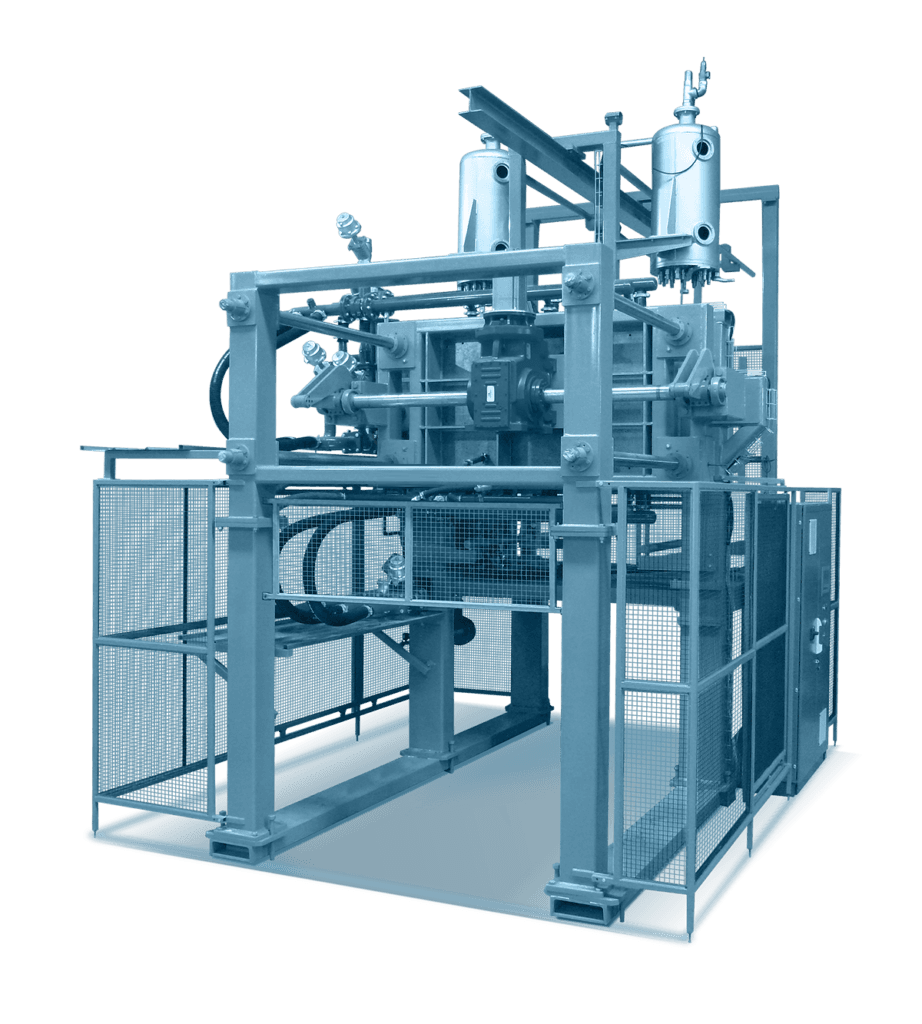
The standard shape molding machine uses a horizontal press arrangement with male and female mold halves. Variable positioning allows the machine to accommodate a range of mold sizes. Molding areas span from 57 x 67 cm for small parts up to 250 x 150 cm for large panels and construction elements. Both hydraulic and electric servo drive options are available. Servo drives offer faster cycle times and lower energy consumption. The standard machine is the general-purpose choice for packaging inserts, fish boxes, and most molded EPS products.
The shuttle shape molding machine features a shuttle carriage that moves the mold assembly between the molding position and a loading/ejection position. While one side is in the steam and cooling cycle, the other is demolded and refilled, which can roughly double throughput on high-volume runs. This design is particularly suited to ICF wall element production and other applications where the shuttle operation improves cycle efficiency or part handling.
What Can You Make With Shape Molding?
Any moldable EPS shape can be produced on a shape molding machine, with each product requiring its own dedicated mold tool:
- Protective packaging — corner blocks and inserts for electronics, appliances, and fragile goods
- Fish and produce boxes — insulated containers for cold-chain transport
- ICF blocks — insulated concrete form wall elements, typically produced on shuttle machines
- Helmet liners and cushioning — impact-absorbing components for sports and automotive use
- Architectural and decorative elements — moldings, cornices, and shaped construction pieces
Each application drives the machine size, mold tooling, and cycle parameters selected during specification.
Auxiliary Equipment
A shape molding operation requires several supporting systems beyond the machine itself:
QMC frames (Quick Mold Change) allow mold changeover in under 15 minutes, minimizing downtime when switching between products. The frame provides standardized mounting points, utility connections, and alignment for rapid tool swaps.
Molds and tools are manufactured to match each specific product geometry, with steam chest design, vent placement, and ejection systems engineered for the part.
Central bead feeding units distribute pre-expanded beads from curing silos to multiple shape molding machines through dedicated feeding pipelines. Feeding guns at each machine meter the correct bead charge into the mold cavity with adjustable pressure and timing for uniform fill.
Central vacuum units serve multiple machines from a single system, extracting residual steam from the mold during the cooling phase. Centralized vacuum is more energy efficient than individual machine-mounted vacuum pumps in multi-machine plants. Vacuum piping connects each machine to the central unit with properly sized lines and isolation valves.
Mixing units blend crushed recycled EPS with virgin beads at controlled ratios before feeding, reducing raw material costs.
Machines for This Stage




Frequently Asked Questions
What is the cycle time of an EPS shape molding machine?
What is the difference between a standard machine and a shuttle shape molding machine?
What mold sizes can the machine accommodate?
What products can be made on a shape molding machine?
Can the machine use recycled EPS beads?
What components are included with a shape molding machine?
Discuss Your Shape Molding Requirements
Our engineering team can help you select the right machine size, mold configuration, and auxiliary equipment for your product range.
Get a Quote