

EPS Scrap Recovery & Recycling Systems
Crusher, grinder, and dust collection equipment for reclaiming EPS production waste and blending it back into the manufacturing cycle.
Why Scrap Recovery Matters
Every EPS production facility generates scrap. Block cutting produces edge trims and offcuts. Shape molding generates sprues, flash, and rejected parts. Without a recovery system, this material becomes waste, an unnecessary cost in both raw material loss and disposal expense.
A properly configured scrap recovery system grinds this waste back into usable material that can be blended with virgin pre-expanded beads and returned to the production cycle. In a well-run plant, scrap recovery rates approach 100% of internal production waste, and the recycled material is routinely mixed at ratios of 5% to 50% with virgin beads depending on the end product requirements. For a broader look at how recycled EPS fits into a sustainable production process, see our EPS recycling guide.
Crusher / Grinder Machine
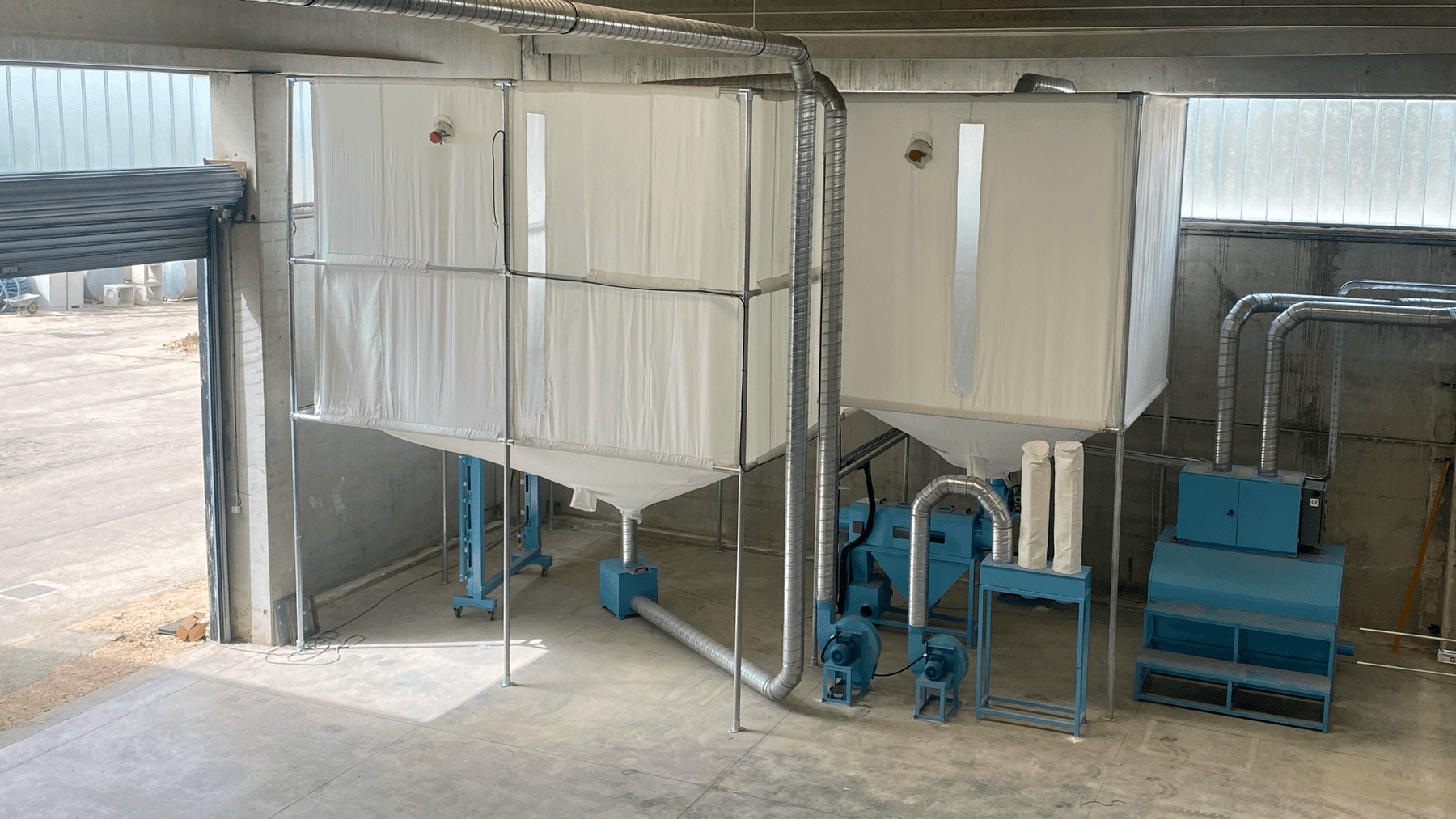
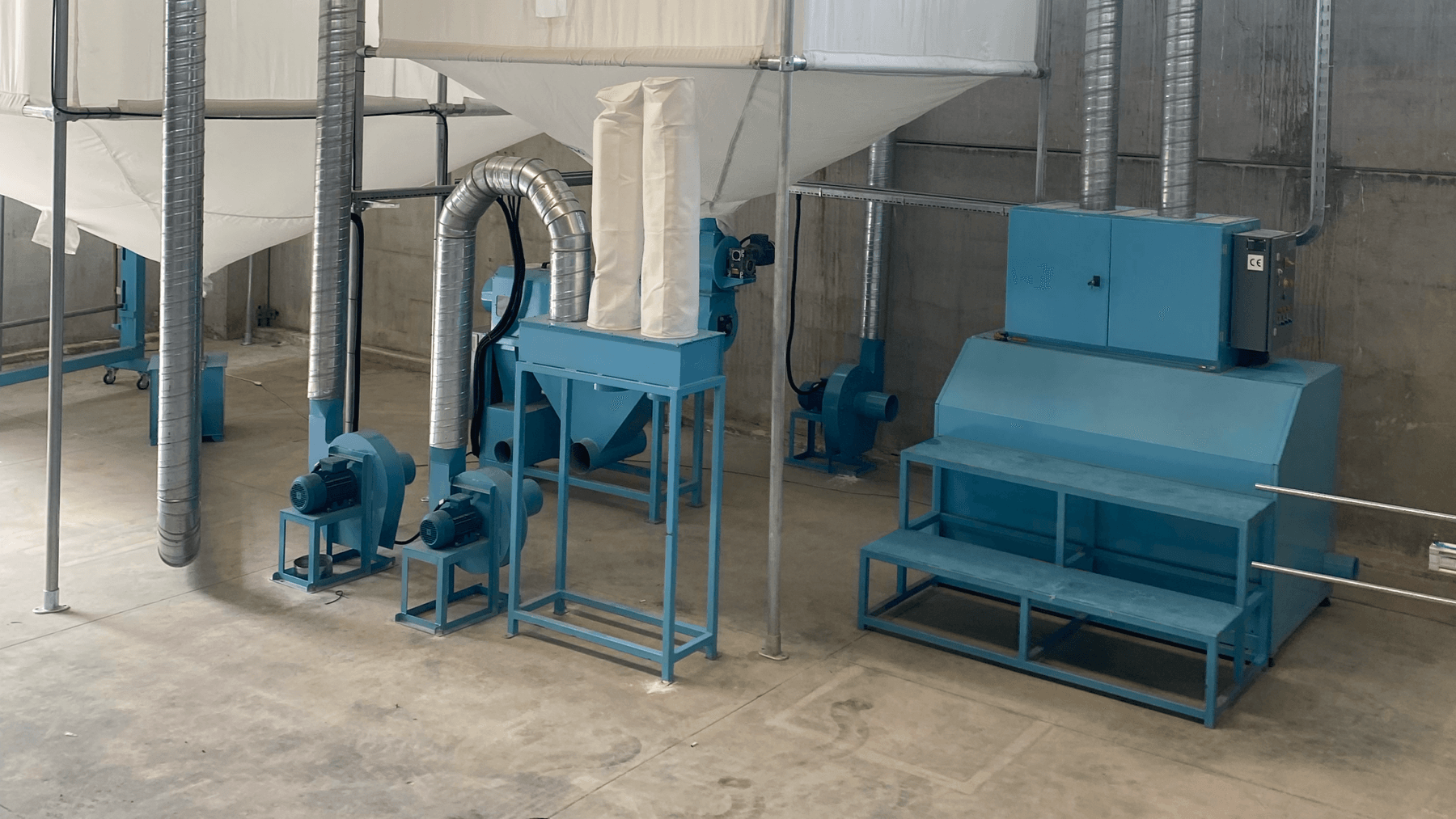
The Eprotech crusher-grinder is a high-capacity machine designed to reduce EPS blocks, sheets, trims, and rejected parts into granules suitable for re-use. Key design features include:
Isolated low-noise body: The machine housing is acoustically insulated to minimize noise levels on the production floor, an important consideration for facilities running continuous operations near personnel work areas.
Interchangeable sieves: Screen inserts with apertures up to 6 mm determine the output granule size. Different sieve sizes can be swapped to match the requirements of the downstream mixing and molding process. Finer granule sizes produce more uniform blending with virgin beads; coarser sizes allow faster throughput.
High capacity: The machine is sized to handle the full scrap output of a block cutting line or multiple shape molding machines, ensuring that scrap does not accumulate or create a bottleneck in material flow.
Dust Collector Unit
EPS grinding generates fine dust particles that must be captured for both air quality and safety reasons (EPS dust is flammable at sufficient concentrations). The Eprotech dust collector uses single-stage separation to filter airborne particles from the grinding area exhaust.
The unit features interchangeable sieves and brushes that allow the separation system to be maintained and adjusted for different operating conditions. Collected dust is contained for proper disposal.
Quality Considerations
While recycled EPS is widely used across the industry, the ratio of crushed to virgin material affects finished product properties. Higher recycled content can reduce bead fusion quality, increase surface roughness, and lower mechanical strength. Each manufacturer determines the acceptable blend ratio based on their end-product specifications and customer requirements. Eprotech mixing units, installed upstream of both block form machines and shape molding machines, provide precise ratio control to maintain consistent product quality.
Machines for This Stage


Frequently Asked Questions
What ratio of recycled EPS can be blended back into production?
What size particles does the crusher produce?
How is the dust separated from usable recycled material?
Can the system handle wet or contaminated scrap?
What is the capacity range of the crusher-grinder?
Does scrap recovery pay for itself?
Discuss Your Scrap Recovery Needs
Contact us with your scrap volume and plant layout. We will recommend the right crusher, grinder, and dust collection configuration.
Get a Quote